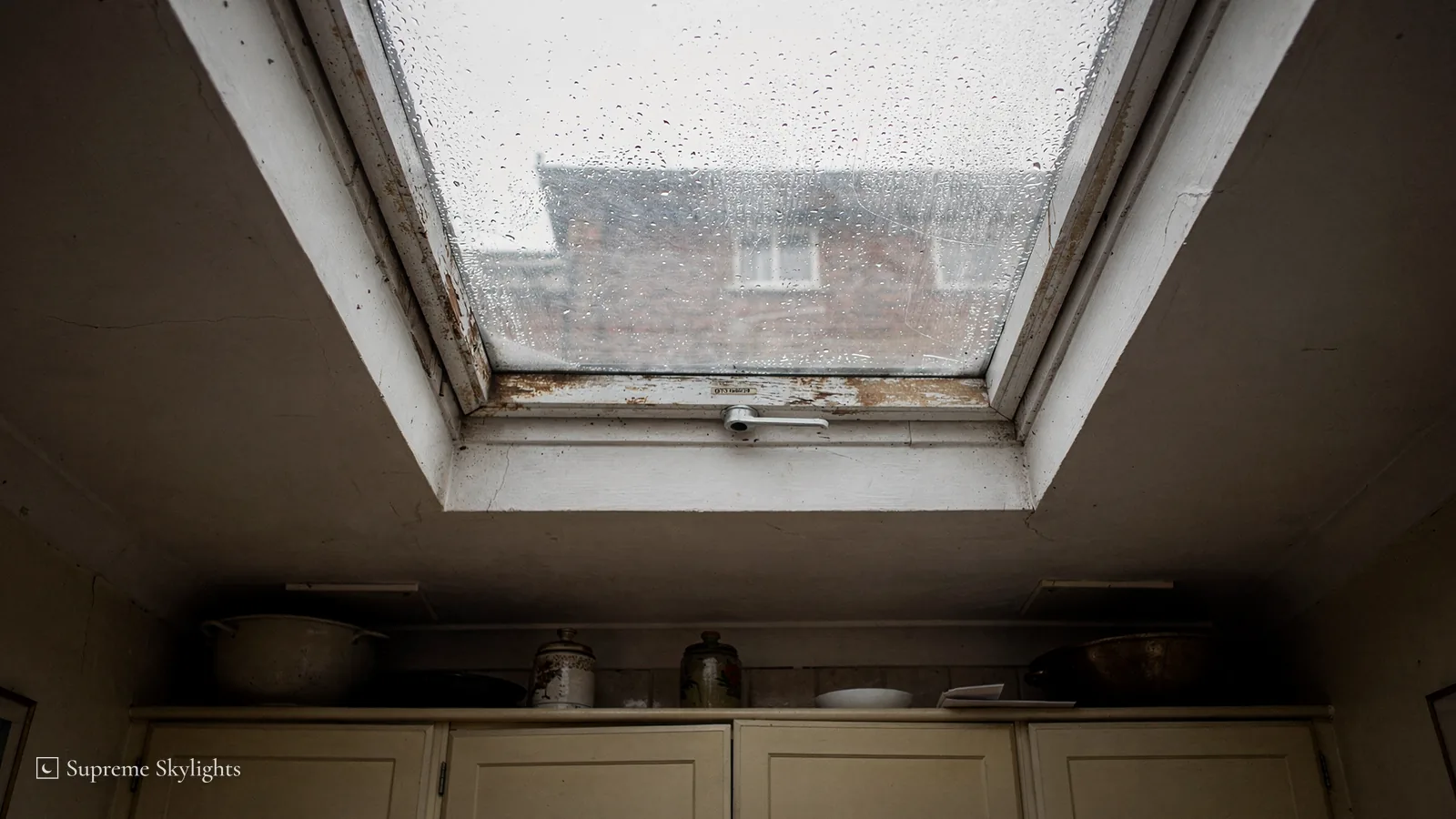
A new skylight or rooflight can need planning permission, Building Regulations approval, both or neither. Which applies turns on where the house stands, what kind of building it is and how far the new glass sits out from the roof. Newport is in Wales, so the Welsh rules lead. Homes over the Severn bridges in Bristol, South Gloucestershire and the Forest of Dean follow a different set, and they have their own section further down.
Planning and Building Regulations are separate questions
Planning permission is about whether a change to the outside of a house may happen at all. Building Regulations are about how the work is done: the structure, the energy performance and the safety of what goes in. A rooflight can be free of one and still need the other, so each question gets its own answer.
For planning, many small changes to a house rely on permitted development, a set of rights that lets householders do certain work without applying. Rooflights and roof windows fall under the part of those rights that deals with roof alterations, known as Class C. Within its limits, no application is needed. Outside them, or where the rights have been taken away, a planning application is the route.
Building Regulations work differently. Fitting a window, roof window or rooflight counts as building work because these are controlled fittings, so the question there is rarely whether the rules apply and more often how the work is approved.
Skylight planning permission in Wales
Across the Welsh side of our area, in Newport, Monmouthshire, Torfaen, Caerphilly, Cardiff and beyond, the rules come from the Town and Country Planning (General Permitted Development) Order 1995 as it now applies in Wales. Its householder part sets out Class C, which covers any other alteration to the roof of a house, and the Welsh Government’s technical guidance for householders explains it.
The projection and height limits
A rooflight or roof window on a house in Wales can be permitted development when two limits are met. It may protrude no more than 15 cm, which is 150 mm, beyond the plane of the slope of the original roof, measured perpendicular to the roof surface. And its highest part must be no higher than the highest part of the original roof. Chimneys, parapets and similar features already on the original roof are ignored for that height test. The materials must also, so far as practicable, match the appearance of the house, and a rooflight that would form a roof terrace needs planning permission.
Protected land and World Heritage Sites
Here Wales parts company with England. Where a house stands on article 1(5) land, inserting a rooflight into a slope of its roof is not permitted development, so it needs a planning application. Article 1(5) land includes conservation areas, National Parks and Areas of Outstanding Natural Beauty, along with others. A house within a World Heritage Site is caught too, named in the same rule as a separate category. The test is whether the house is inside the boundary; being nearby does not count.
Around Newport the rule reaches several kinds of place. Newport City Council’s conservation areas include Caerleon, Stow Park and the Town Centre, and Monmouthshire, Torfaen and the other councils designate their own. Crickhowell, Gilwern and Govilon lie inside Bannau Brycheiniog National Park, where the National Park Authority is the planning authority. Tintern, Llandogo, St Arvans and Catbrook sit inside the Welsh part of the Wye Valley AONB, and the town of Blaenavon lies inside the Blaenavon Industrial Landscape World Heritage Site. For one particular address, the planning authority gives the answer, and the Welsh Government’s mapping shows the conservation area boundaries, the National Park and the AONB.
Side-facing roof slopes
A further condition applies to a window on a roof slope that forms a side elevation of the house, where the window, projected down to the ground, would be within 10.5 m of the boundary opposite that side. In that position it must be obscure-glazed, it must be fixed shut unless the part that opens is at least 1.7 m above the floor or stair directly below it, and it must be kept that way permanently.
Flats, Article 4 directions and conditions
Flats and maisonettes carry no householder permitted development rights, since these rules are written for houses. A council can withdraw permitted development rights with an Article 4 direction, which is most common in conservation areas, and Newport City Council lists Article 4 documents for Caerleon, Lower Dock Street, Stow Park and The Shrubbery on its conservation area maps. Rights can also have been removed by a condition on the planning permission for the house.
Listed houses
Permitted development does not stand in for listed building consent. On a listed house, a rooflight that would affect its character as a building of special architectural or historic interest needs that consent under the Historic Environment (Wales) Act 2023, and consent covers work to fixtures and details inside as well as out. Consent is applied for through the local planning authority. Cadw recommends which buildings are listed, the Welsh Ministers compile the list, and each record appears in Cof Cymru. Carrying out such work without consent can be a criminal offence, and Cadw’s listed building consent guidance sets out the process.
In Wales, a new rooflight in the roof slope of a house inside a conservation area, a National Park, an AONB or a World Heritage Site needs a planning application.
Building Regulations for a new rooflight in Wales
A new rooflight in Wales generally calls for Building Regulations approval. The roof usually has to be altered to form the opening, it must carry the weight of the unit or be strengthened, the rooflight must be energy efficient, and near a boundary its fire performance comes into it. Replacing a roof window like for like still counts as building work.
The Welsh guidance documents carry the detail. Approved Document L (Wales) says a new or replacement roof window in an existing home should have a U-value no worse than 1.4 W/m²K or a Window Energy Rating of Band B, and a rooflight no worse than 2.2 W/m²K. Glazing safety in Wales is the subject of Approved Document N. A roof window in a loft room may also raise escape questions under Approved Document B.
There are two kinds of building control body in Wales, and you can choose either. Where the work is notifiable, we handle the Building Regulations notification with local authority building control or a registered building control approver. The skylight Building Regulations guide for Wales covers each part in more depth.
Roof lanterns and flat rooflights
Flat roofs bring their own questions. A roof lantern usually stands well over 15 cm above the roof it sits on, so adding one to an extension that is already built normally falls outside permitted development and needs a planning application. For a lantern that forms part of a new extension, we confirm the position with the council before work starts. Our page on roof lantern planning and Building Regulations goes through the lantern case.
A flat rooflight raises the same Class C questions as any other roof alteration, and do flat rooflights need planning permission answers them for that product. For a roof window in a pitched roof, does a VELUX need planning permission covers the most familiar case.
Rooflight planning permission in England
Over the bridges, the English rules apply to homes in Bristol, South Gloucestershire, the Forest of Dean and North Somerset. They come from the Town and Country Planning (General Permitted Development) (England) Order 2015, where Class C again covers a rooflight or roof window on a house. In England, adding one is usually permitted development, provided it meets the limits and conditions below.
Limits on an English roof
The rooflight must not stick out more than 150 mm beyond the plane of the original roof slope, frame included, measured at right angles to the roof surface, and no part of it may be higher than the highest part of the original roof. Original means the house as it stood on 1 July 1948, or as first built if it is newer.
The side-slope condition is wider in England. Any rooflight or roof window on a roof slope forming a side elevation of the house must be obscure-glazed, and must be non-opening unless the parts that open are more than 1.7 m above the floor of the room it is in. It applies however far the house is from the boundary, and the whole window must be obscure-glazed, while the height test only decides whether it may open.
Designations, conversions and flats
In England, Class C rights for a rooflight survive a conservation area on its own, and they survive an Area of Outstanding Natural Beauty (now called a National Landscape), a National Park or a World Heritage Site. A council can still remove the rights with an Article 4 direction, and a planning condition can remove them too, so we check with the council before any work. A house that exists only through a change-of-use permitted development right, such as an office or farm building converted under Part 3, has no Class C rights; one converted with a full planning permission keeps them unless a condition took them away. A flat or maisonette in England has no householder permitted development rights either.
Listed buildings and regulations in England
A listed house keeps its Class C planning rights, but a new or altered rooflight will almost always need listed building consent, and that consent decides the job. It is applied for through the local planning authority with no fee, and work done without it is a criminal offence. The National Heritage List for England shows whether a house is listed, at grade I, II* or II.
Under Table 4.2 of Approved Document L, Volume 1, a roof window going into an existing home, new or as a replacement, should reach 1.4 W/m²K or WER Band B, while a rooflight should reach 2.2 W/m²K. Glazing safety in England sits in Approved Document K. A new rooflight will generally need Building Regulations approval, and we notify the council’s building control team or a registered building control approver where the work is notifiable. The government’s technical guidance for householders is the official reference.
In England, a conservation area does not by itself remove Class C rights for a rooflight; an Article 4 direction or a planning condition can.
Checking before work starts
When a case is close to a limit, the council’s planning team can confirm it, and a Lawful Development Certificate puts it beyond doubt that no application is needed.
At a free survey we look at the roof, the room and the address together, and we tell you which consents the job is likely to need before you receive a fixed written quote. Where the house may sit inside a protected boundary, the planning authority’s answer comes first. Our pages on rooflights in conservation areas in Wales and conservation rooflights cover the products that tend to suit older houses.