
Blaenau Gwent, a 21.4-mile road journey from Newport, to the north-west
Rooflight and skylight fitting in Blaina
- 10-year workmanship guarantee
- We handle the Building Control notification where notifiable
Between Brynmawr and Abertillery
Blaina is a town in the County Borough of Blaenau Gwent, in the South Wales Valleys, with Brynmawr on one side of it and Abertillery on the other. Its Welsh name is Blaenau. It belongs to the ancient parish of Aberystruth and to the historic county of Monmouthshire. From Newport the road journey is 21.4 miles, heading north-west.
Terraces from the Victorian and Edwardian years often have a main roof with a lower roof over a back addition, and semis from later decades often have a loft above the landing. Every house is looked at as it stands, and the first questions are which room is short of daylight and what is directly overhead.
| The house | The roof above | A fit worth discussing |
|---|---|---|
| Terrace with a back addition | A main slope, and a lower roof over the extra rooms | Glass in the main slope, and a separate answer for the lower roof |
| Semi with a loft | A pitched roof, with the loft over the landing | A sun tunnel between the slope and the stairwell |
| Upstairs bathroom under a slope | A pitched roof close above the ceiling | A roof window that opens by switch or remote |
| Newer house with an open stair | A pitched roof over a shared void | A roof window sized for the stairwell |
Where glass earns its place in these houses


11:00
Who decides in Blaenau Gwent
The planning authority for Blaina is Blaenau Gwent County Borough Council. Which rooflights on a house may go ahead as permitted development, and under what limits, is laid out in the Welsh planning guide we keep.
The Building Regulations run alongside planning as a second process, and a rooflight can pass one and still need the other. If the job is notifiable, we take care of the notification through local authority building control or a registered building control approver. The Welsh Building Regulations guide covers that side in full.
Householder permitted development does not reach flats or maisonettes. If a house is listed, any work that would affect its character needs listed building consent, which goes through Blaenau Gwent. Cadw recommends which buildings are listed, and the Welsh Ministers compile the list.
The hall that misses the winter morning
A sun tunnel for the part of the house with no outside wall.
In January the day starts late, and the hall of a semi or terrace is the last place in the house to notice. The front door is shut, the doors off the landing are closed, and the stairs sit in the middle of the plan with no wall of their own to the outside. The hall light goes on without anyone thinking about it.
A sun tunnel is made for that spot. It has three parts: a roof dome that collects daylight, a tube running down through the loft, and a ceiling diffuser at the bottom that spreads the light into the room. Because only daylight travels that way, the diffuser gives nothing after dark and the ordinary fitting does the work. It is a way to take the edge off a gloomy stairwell by day, and it is not a lamp.
Two things decide whether one is possible. The first is the loft: the tube needs a clear path from the roof to the ceiling beneath, past purlins, a water tank or boxes of stored things. The second is the roof covering, because the flashing around the dome is made to suit it, so the survey records whether the slope is tile, slate or something else. Where the loft is not a straight drop, deciding whether a rigid or a flexible tube suits it is the next question.
Keep a tube away from the room where someone sleeps. A tube can let early daylight into the room on a summer morning, and a sleeping room does better with a roof window and its blackout blind. Hallways, landings, dressing spaces and small bathrooms are the places where early daylight is welcome. Whether a sun tunnel needs planning permission is a separate question, answered in our page on sun tunnels and planning.
Stored boxes can be moved aside, but a water tank is harder to shift, so a route that clears it is the first thing we look for. Choosing where the diffuser goes is worth a few minutes on the landing. It does most for the stairs when it sits over the treads or the turn, and less when it is tucked in a corner.
Sun tunnel, stairwell
- Best rooms
- Hall, landing, walk-in wardrobe, small bathroom
- Needs
- A clear path through the loft
- On the roof
- A dome with flashing to suit the covering
- After dark
- No light comes down; the diffuser is a pale disc
A window you cannot reach
Opening roof windows that work from a switch or a remote.
Start by standing under the window over your stairs and looking up. Could you open it? On a tall stairwell or above a bath, a window cut into the slope can sit well out of arm's length, and a window nobody can open soon stays shut.
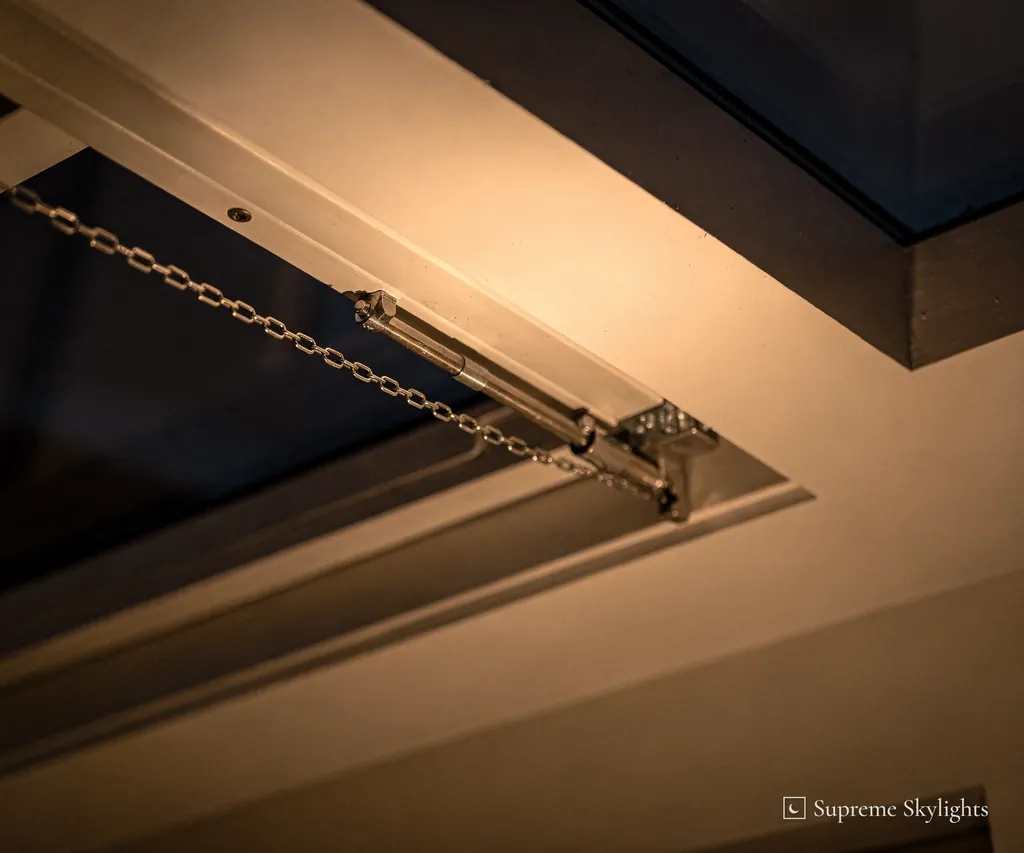
An electric opening roof window answers that, because it is worked by a wall switch or a handset. Solar versions can run from a panel, with no mains cable to the window. For its solar and electric roof windows, VELUX describes a sensor that shuts the window when rain arrives. The sensor is VELUX's own and belongs to those models, so if rain closing the window matters to you, say so early and we will name the model that has it. Our guide to electric or manual opening weighs the two, and another page explains how an electric rooflight is powered.
Why bother with opening at all? Approved Document F (Wales) expects every habitable room to have a way of purging stale air quickly, and a window that opens can provide it. In a stairwell that is not a habitable room, the benefit is simpler: warm, damp air from the bath below rises, and a sash that opens lets it out.
Glass that stays shut is also the surface that mists. Steam from the bathroom settles on the coldest surface it meets, so a tall stairwell window can streak in winter if nothing clears the air. An extractor that vents outdoors helps, and an opening sash can help as well.
VELUX makes its roof windows in set sizes, so the choice runs from a fixed list, with the stairwell opening matched to the nearest sensible size. Think about the household too. A window that opens at the press of a button gets opened, so the person with the highest reach in the house is not the only one who can air the stairs. The order of work matters with an electric window. The cable route is best decided before the plasterboard goes on the reveal, so tell us at the survey if you want a switch, and where it should sit. Choose a place you will actually reach, near the stair rail or inside the bathroom door. If the window will be worked from a handset instead, decide where the handset lives, because one that sits in a drawer upstairs is a handset nobody uses.
| Kind | How it opens | Consider |
|---|---|---|
| Manual | By hand or a pole | Fine where the sash is in reach |
| Solar | Remote, panel-powered | No mains cable to the window |
| Electric | Switch or remote | A cable route is planned first |
The bathroom under the lower roof
Privacy, steam and a window facing the sky.
Terraces with a back addition tend to put the bathroom there, under the lower roof, where the ceiling follows the slope. A roof window is a natural fit, since it gives a bathroom daylight without a wall facing the neighbours. A bathroom is also the room where the window works hardest.
By day a window in the slope is hard to see into. After dark the picture changes: the lights are on inside, the glass behind them is black, and anyone standing at the window position can be seen from a house higher up the hill. Whether that is a real question for your home is best settled by standing in the room at the survey and looking out. A blind settles it either way.
Steam is the other half of the story. Moisture settles on the coldest surface, and glass is often it. Pick a window that opens, run the extractor longer than seems necessary, and wipe the sill. That keeps the frame in better order than hoping the room dries itself.
On the numbers, Approved Document L (Wales) sets out guidance that a roof window should meet 1.4 W/m²K or Window Energy Rating Band B. It is a point of comparison between models, and we go through it with you when we suggest one.
Putting in a new roof window is building work in the Building Regulations' terms. When the job is notifiable, we handle the notification, and it goes to local authority building control or a registered building control approver. The size of the opening depends on the slope and the joists around it, and it is best marked out on the ceiling inside before anything is cut outside. Replacing an old window in its existing opening is a smaller job, and our page on replacing an old skylight shows how the two differ.
Before booking in Blaina
Does the Welsh name Blaenau change anything?
No. Blaina and Blaenau are the same town, and our work is the same under either name. Planning sits with Blaenau Gwent County Borough Council.
Which sun tunnel route suits a semi with a hall in the middle?
The most direct line the loft allows between the roof and the hall ceiling. A short, straight tube is the simplest case, while a bend depends on the product and on what else is up there. A tube is a poor match for a room where someone sleeps. Both kinds of tube are compared in this sun tunnel guide.
Can a rooflight go in without a planning application?
For a house, the answer can be yes under permitted development in Wales, inside limits. The planning guide for Wales lists them, and listed buildings and flats are treated separately.
What does a fixed written quote follow?
The free survey. You get nothing priced before someone has looked at the roof and the room. What follows the survey is a fixed written quote, and the survey itself costs nothing.
Who certifies the Building Regulations side of a new roof window?
Local authority building control or a registered building control approver. gov.wales expects a new rooflight to need approval in the general case, and where the work is notifiable we handle the notification for you.
Where can I reach you about a Blaina survey?
Fill in the survey form, or contact us on WhatsApp, 07880 284133, or at info@supremeskylightsnewport.co.uk. Give the address and the room that needs light. Every job comes with a written guarantee on workmanship, lasting 10 years.

Book your free survey
10-year workmanship guarantee.
Building Control notification handled where notifiable.