Vale of Glamorgan: 18.9 road miles from Newport, travelling south-west
Rooflight and skylight fitting in Dinas Powys
- 10-year workmanship guarantee
- We handle the Building Control notification where notifiable
Georgian villas, railway houses and the road to Barry
Dinas Powys is a town spread across the full width of a wooded valley, with the Cadoxton River running in the valley, and the Vale of Glamorgan Council is its planning authority. The substratum under the whole area is a limestone, likely laid down under a warm ocean in the distant past. The old centre keeps a traditional, almost rural character, with a village common and small independent shops, pubs and restaurants. A survey here is free, and nothing is priced before it has taken place.
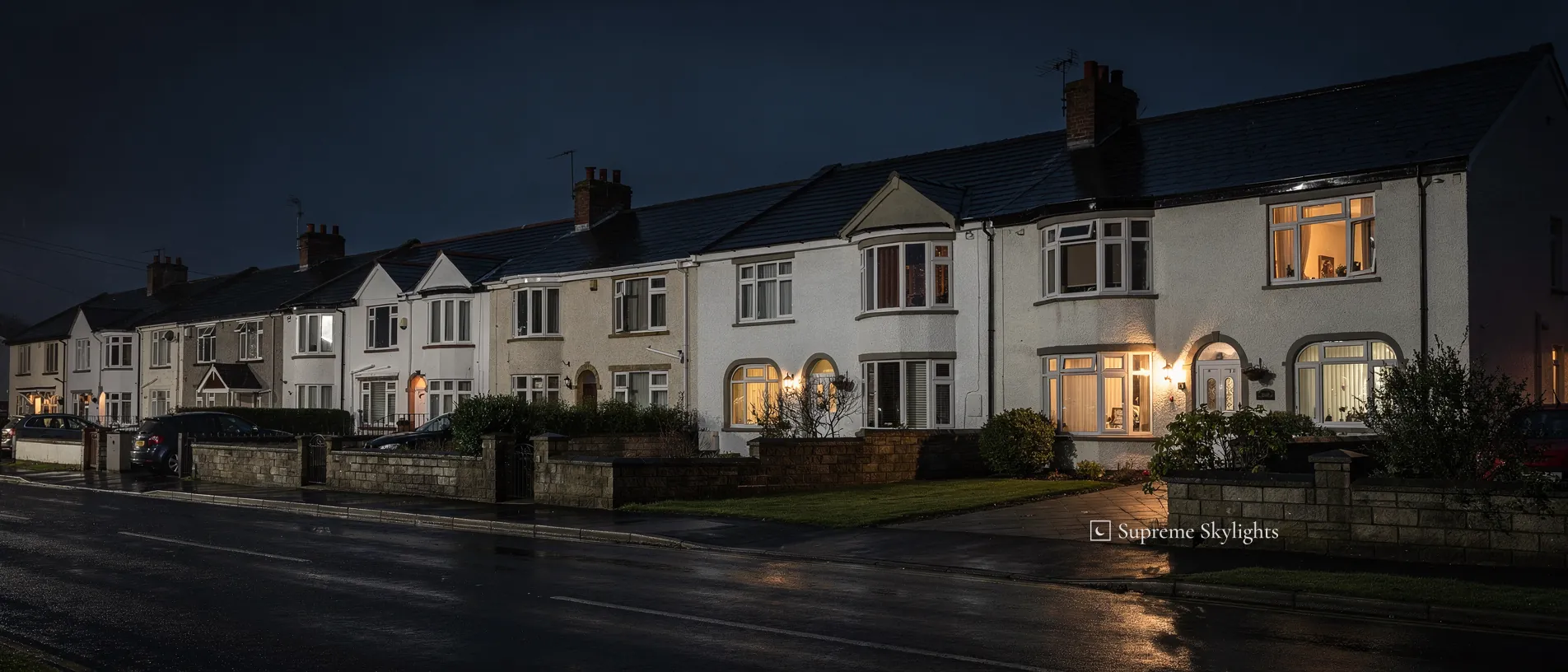
The housing came in stages. The railway made the area a more attractive place to live, and many workers from Barry and Cardiff moved in. New housing of more modest proportions went up along the railway near the area now called Eastbrook, while the main Cardiff road was developed over the earlier trackway. Housing developments have been added since the late 20th century, and more recent building has run in a line either side of the main Cardiff road and in the direction of Cadoxton and Barry. Older and newer homes meet different roof questions, and the table pairs them.
| Period of the house | Roof above the room | Question worth asking |
|---|---|---|
| Listed villa or older house in the old centre | Pitched, and possibly listed | Does the work need listed building consent? |
| Railway-era house of modest size | Pitched, with a loft over small bedrooms | Which room gains most from a roof window? |
| Estate house from the late 20th century | Pitched tile over a loft with room to use | Is the loft deep enough for a bedroom? |
| House with a rear extension | Flat roof behind the main pitch | Where does daylight stop reaching the middle? |
Which products suit these roofs

11:00
Vale of Glamorgan rules, listed houses and a conservation area
Planning applications in Dinas Powys go to the Vale of Glamorgan Council. The council's conservation areas include Dinas Powys, so a house inside the boundary is treated differently in Wales: a rooflight added to it is not permitted development, and the owner applies for planning permission. The DataMapWales conservation area layer shows the boundaries, and the council confirms an address.
For a house outside any boundary, the question turns on the limits described in our Wales planning guide. Flats have no householder rights at all. Rights can be withdrawn by an Article 4 direction from the council, and the first permission for a house may carry conditions with the same effect.
Garnhill House and The Mount are both Grade II listed buildings. Work that would affect a listed building's character needs listed building consent, applied for through the Vale of Glamorgan.
Two Grade II villas and the rule that follows
Listed buildings, who decides, and what to ask first.
Garnhill House is a Grade II listed building in Dinas Powys, and its terraced gardens were exhibited at the Royal Academy in 1904. The Green family have occupied Garnhill House for well over 100 years. The Mount, a late Georgian villa, is another Grade II listed building. Houses like these make a rooflight a careful question, because a listing is about character as well as age.
In Wales, any alteration that would affect a listed building's character as a building of special architectural or historic interest needs listed building consent. The law behind that is now the Historic Environment (Wales) Act 2023, in force from 4 November 2024. Consent reaches historic fixtures, fittings and details indoors, not only the outside, and a minor job can be caught. Carrying out the work without it can be a criminal offence.
The Vale of Glamorgan Council is the body that receives such applications for Dinas Powys. Cadw, the historic environment service of the Welsh Government, advises on listing. The Welsh Ministers compile the list of listed buildings, and in practice Cadw recommends which buildings are listed or delisted. Cadw publishes each record in Cof Cymru, so the listing for an address can be read before a survey is booked.
Cadw also notes that replacing traditional windows with uPVC on a listed building will not normally be acceptable. For a roof window that points toward materials and a profile that suit the roof, and our conservation rooflights page covers the choices.
On the energy side, Approved Document L (Wales) offers a fallback where a replacement window or roof window on a home of architectural or historic interest cannot reach 1.4 W/m²K: centre-pane glazing at 1.2 W/m²K, or low-e secondary glazing. The fallback never extends to rooflights, and it is guidance, worded as "should".
A house that is not listed but stands in a conservation area is a separate case: in Wales, a rooflight added to it is not permitted development.
| Who | What they do |
|---|---|
| Cadw | Recommends which buildings are listed |
| The Welsh Ministers | Compile the list |
| Vale of Glamorgan Council | Takes the application for consent |
| Cof Cymru | Publishes each listed building record |
A slope under the trees
Wooded valleys, shade and the sky a roof can see.
Dinas Powys lies across a wooded valley, and woodlands such as Cwm George and Cwrt-yr-Ala are part of the setting. Trees give roofs a particular problem: shade. A roof window on a slope under branches gets dappled light for much of the year and little direct sun, and what looks open from the ground can look different from the loft.
The first job on the survey is therefore to look at the sky from the position of the opening, not from the garden. A slope that clears the canopy gives a roof window more to work with. A slope that does not may suit a sun tunnel instead, but the dome of a sun tunnel also needs open sky, and a deeply shaded spot helps neither.
Leaves are the other part of living under trees. A flat rooflight on an extension roof can collect whatever falls on it, and glass that is hard to reach gets cleaned less often. So access is something we raise at the survey, in order that the glass can be reached from somewhere safe.
Shade has a benefit too. A bedroom roof window under a tree-lined slope may be gentler in July than one on a bare south-facing roof, and a blind gets less work. A window that opens lets warm air out of the room.
Season counts as well. A canopy in full leaf blocks much more sky than the same branches in January, so the view at a winter survey flatters the slope, and a summer one is the harder test.
Direction still counts. A north-facing slope gives a steady, even light, while a south-facing one gets the high sun, and the canopy changes each of those. Bedrooms, studies and bathrooms can be matched to the slope they sit under, so a room that needs calm light takes the shaded side and a kitchen or landing takes the brighter one.
The small size of a roof window brings its own advantage under trees. A narrow window placed where the sky is widest can take more from the clear patch than a wide window placed carelessly, and that is the reason for measuring the sky at the survey.
A wooded-valley slope
- First check
- The sky from the opening, not from the garden
- Roof window
- Needs a slope that clears the canopy
- Sun tunnel dome
- Also needs open sky
- Flat glass
- Reach it safely for cleaning
- Summer
- Shade eases the afternoon sun
Swapping an older roof window
Railway-era houses, size codes and ventilation.
Houses along the railway near Eastbrook were new when the line was young, and they were of more modest proportions than the grand villas elsewhere in the town. Whatever the age of the house, a roof window that has done many winters is a candidate for swapping, and the first question is the size of the one coming out.
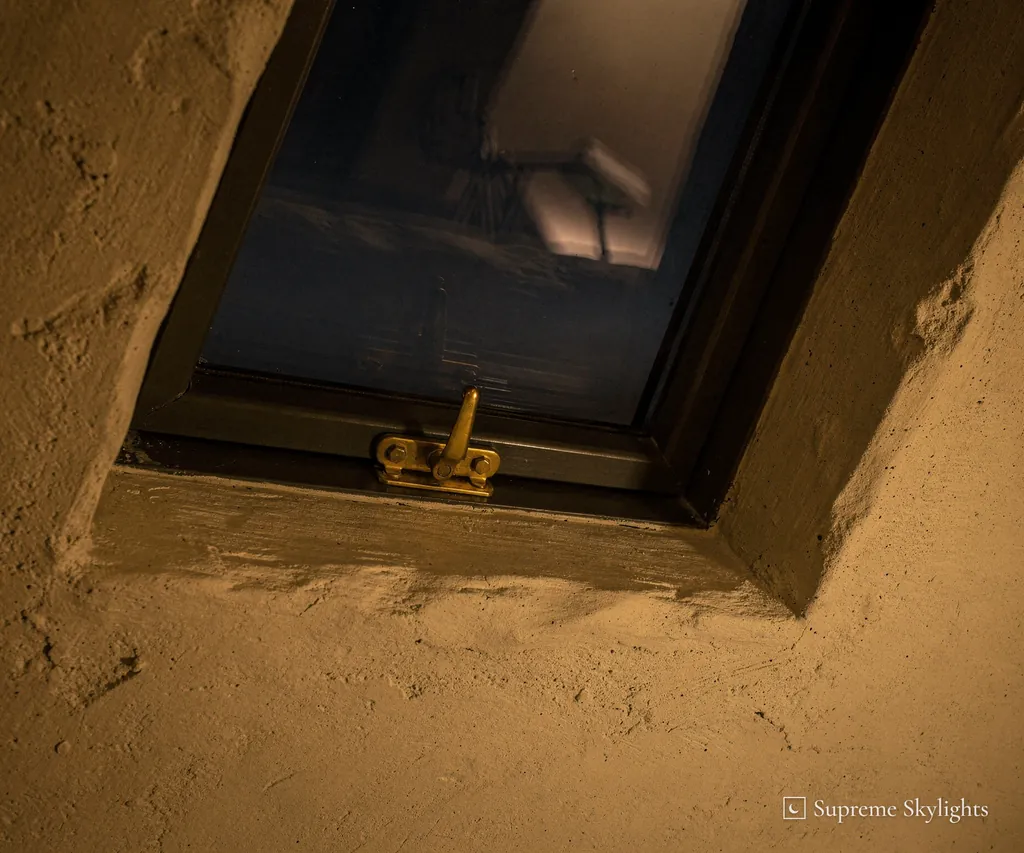
VELUX lists each roof window size code with its width and height, and a metal sign on the sash carries the code, legible when the sash is swung up. Windows made after 1968 have one, so a photograph of it is the quickest route to a match. Our page on size codes explained shows where to look.
A like-for-like swap is still building work, and it brings the energy figure with it. A new or replacement roof window should meet 1.4 W/m²K or Window Energy Rating Band B, which is guidance from Approved Document L (Wales). Where the work is notifiable, we handle the notification with local authority building control or a registered building control approver.
Ventilation is part of a swap too. Approved Document F (Wales) wants the home's air to be no poorer afterwards, so the vents on the old window are noted before it comes out.
A small bedroom under the slope in a house of modest proportions leans on its blind more than on its glass. By day the window gives the room a patch of sky, and by evening the pane turns dark and shows the lamp. A blind fitted for the room, chosen with the window from what the maker lists, settles both ends of the day.
Later houses often have a loft that the owners may want to use. Whether it is deep enough for a bedroom is settled by the headroom under the ridge at the window position.
Send a picture of the sign and a view of the roof from the garden with the quote form, and the written quote follows the survey.
Asked in Dinas Powys, answered here
Is Dinas Powys part of the area you serve?
It is. From Newport, the road to Dinas Powys runs 18.9 miles to the south-west, and the survey costs nothing. The quote form takes a street and a room. Dinas Powys is in the Vale of Glamorgan, and the Vale of Glamorgan Council is its planning authority.
Does a conservation area apply to my house?
The Vale of Glamorgan's conservation areas include Dinas Powys, and a boundary can run along a street. The council confirms whether an address is inside one. In Wales, a rooflight added to a house inside one needs a planning application, as the Welsh planning guide explains. Outside a boundary, the guide's limits for a house apply.
Our house is Grade II listed. Who gives consent?
The Vale of Glamorgan Council takes the application for listed building consent, which is needed where the work would affect the building's character. Cadw's guidance says uPVC replacement windows will not normally be acceptable on a listed building, and every listing is recorded in Cof Cymru, where an address can be looked up.
What do trees do to a roof window?
They shade it. A slope that clears the canopy gets more from a roof window, and the survey looks at the sky from the opening itself. A summer survey is the harder test, since branches in leaf block more than bare ones.
How is a replacement window matched?
By the size code on the VELUX type sign on the sash. A photograph of it helps.
Will a swap need Building Regulations paperwork?
Even a swap into the same opening counts as building work. Where the work is notifiable, we handle the Building Regulations notification, and it goes to local authority building control or a registered building control approver.

Book your free survey
10-year workmanship guarantee.
Building Control notification handled where notifiable.