
Kingswood: 29 road miles from Newport, in a south-easterly direction, beyond the Severn
Skylights and rooflights across Kingswood, Bristol
- 10-year workmanship guarantee
- We handle the Building Control notification where notifiable
Which kind of Kingswood house are we looking at?
Kingswood is described as a town and civil parish of the South Gloucestershire district, within Gloucestershire. Whitfield Tabernacle Conservation Area is among the conservation areas of that district. The street-by-street mix of homes is something a visit establishes, so the table sticks to types of house and the ages they can come from.
Towns of this size can mix periods, with a Victorian terrace beside an interwar semi, a post-war bungalow and a recent infill house. Each roof asks something different of a piece of glass, and the mix below is general to English towns and not a record of Kingswood's streets.
One fact does carry across the whole town: the planning authority is South Gloucestershire Council, whatever the age of the street. That sets who is asked about an address and which conditions might be attached to it.
| Period of the house | Roof and attic | Glass that can suit |
|---|---|---|
| Victorian or Edwardian terrace | Slate or clay tile, a steep loft | Conservation-style roof window, front or back |
| 1930s semi | Hipped, tiled, a roomy loft | Two roof windows, one for each bedroom |
| Post-war bungalow | Low pitch, sometimes with a flat porch | A light tube or flat rooflight over the hall |
| House with a family-room extension | Flat, or low-pitched | A roof lantern, or an opening rooflight |
Roof glass for older streets and newer extensions

11:00
South Gloucestershire Council and what England's rules allow
Kingswood is in England, so English rules decide, and South Gloucestershire Council is the planning authority. Permitted development under Class C can cover a rooflight or roof window on a house, within limits set out in the England part of our planning permission guide.
The council's conservation area page is where boundaries are shown, and Whitfield Tabernacle Conservation Area is one of the district's areas. Standing inside a conservation area leaves the Class C right in place for a house in England. What takes it away is an Article 4 direction or a planning condition, and only the council can say whether either reaches a given address. That is the question we put to South Gloucestershire Council before any work.
A listed house is handled differently: a new or altered rooflight almost always needs listed building consent, the council decides it and no fee is charged. A flat gets no householder rights at all, and a house whose status as a home came only from a change-of-use permitted development right is outside Class C as well. The National Heritage List for England is where a house is looked up.
Where there is doubt over whether a job needs an application, the council can confirm, and a Lawful Development Certificate is the document that settles it formally. Permitted development also leaves the Building Regulations in place, as it does any other consent that a job needs.
Fitting one of these is controlled work, so the Building Regulations come into play. Where the work is notifiable, we handle the Building Regulations notification with the council's building control team or a registered building control approver.
12:00
Around Kingswood
An opening rooflight over a bathroom ceiling
Steam, reach and a switch that does the lifting.
Does a bathroom rooflight need to open? Over a room with a flat or low-pitched roof it is worth thinking about, because a fixed pane lets light in and leaves the steam where it is. An opening unit gives warm air a way out and lets the glass clear after a shower. The ceiling above a bath is also out of reach, which is where an electric opener comes in.
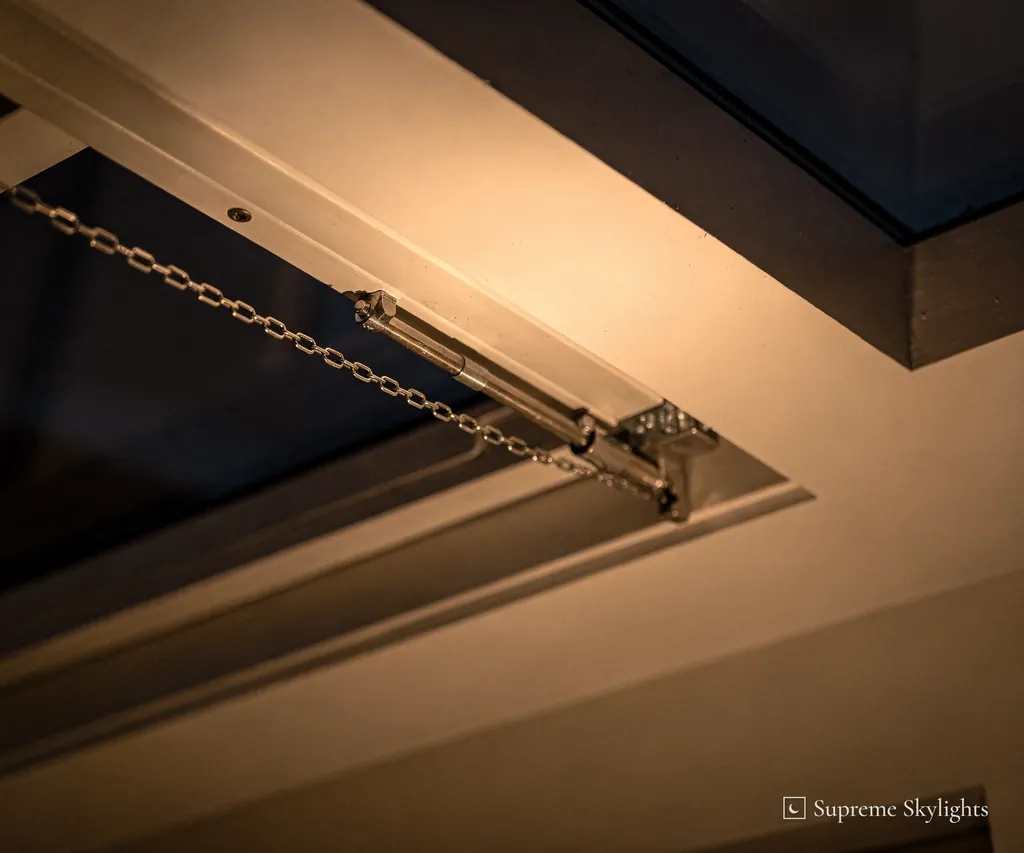
An electric rooflight opens at the touch of a wall switch or from a handset. According to VELUX, its electric and solar roof windows carry a built-in rain sensor that shuts them once rain starts, and that sensor is particular to those models. VELUX also makes solar roof windows, and which route suits depends on the position of the roof and what lies beneath it. The comparison of electric and manual opening sets out the choice.
Power is the practical side. An electric unit needs a feed to the opening, and the cable route is something the survey works out. A bathroom is also a place where water and electricity sit close together, so the position of the switch gets thought about before anything is ordered.
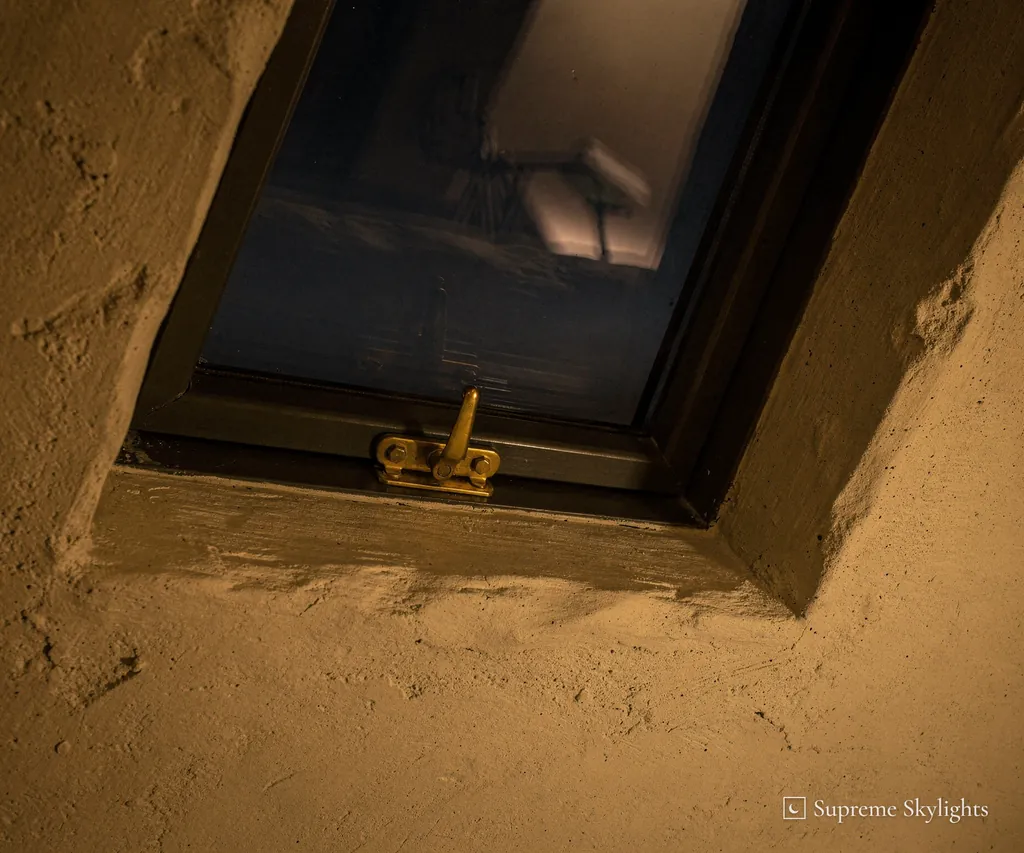
Late in the day the glass above the bath behaves like a dark mirror. With the bathroom lit and the sky beyond it black, the pane returns the room to itself, and anyone looking from a window higher up can see in. A blind drawn across solves that. The same steam that clouds a mirror gathers on cold glass, so letting the room air while the shower runs is a habit worth having.
If the bathroom roof is pitched, a roof window is the product and the choice is again between an electric, solar or manual opener. Our roof windows hub shows how they differ.
A last point is the blind. A rooflight over a bathroom can take one, and a bathroom blind is something to choose for the room's damp air as much as for the light. Ask about it when the opening unit is chosen, so both arrive together.
Bathroom rooflight, first visit
- Opening
- Electric or solar, for a roof out of reach
- Power
- Cable route or solar panel
- Blind
- Evening privacy, chosen with the unit
- Ventilation
- Steam leaves while the window is open
Older roofs near a conservation area
Low-profile glass, a listing search and the council's answer.
Whitfield Tabernacle Conservation Area is among those in the South Gloucestershire district. A house close to a boundary raises the same questions as any older house. Is it listed, and does an Article 4 direction or a planning condition apply to the address? Both get answered before the glass is chosen, since the answers decide whether a job goes ahead as planned or waits for consent.
On a Victorian or Edwardian roof, a conservation rooflight can sit low in the slope. Its frame can be slim, with glazing bars across the pane, so from the pavement the glass can blend with the covering, which counts for a lot when a house has an older frontage. Details of the product are on the conservation rooflights hub.
Slate and old clay tile are cut round the frame, and the flashing has to suit the covering. Slates that crack when lifted need matching ones. Rafters in an older roof are measured on site, because their spacing sets the widest opening that avoids cutting structure.
Indoors, a high ceiling and a deep roof void give the opening a deep reveal. It can be plastered square and painted in the room's own colour, so the window looks like part of the original room.
For a listed house, consent decides the job. Nobody should assume a house in or near a conservation area is listed, or unlisted, without looking it up. The search takes a minute and it saves a job from stopping halfway.
Neighbouring streets can differ a good deal, with one terrace in slate and the next in tile, so each address gets its own look instead of a rule of thumb.
Access in a terrace is the other practical matter. Where the only way to the back of a house is through it, a frame and a pane have to pass through the hall, and a ladder needs a yard with some room. That is looked at on the visit, because a tight route can change which product makes sense.
A roof lantern over the family table
What it adds in November and what it costs the room in heat.
Think about the hours a family room is used. In November most of them come after dark, so a lantern earns its place at weekends and at midday, and in the evening it shows a lit room in dark glass. It does not produce any light. What you see in it is the table, the pendants and the kitchen behind you.
Structurally, a lantern is a raised glazed frame set on an upstand, and its glazing is pitched. It is a bigger structure than a flat rooflight, and the structure beneath it is part of the survey. The comparison of lantern against flat rooflight weighs the two for a given room.
Planning needs a look. Over an old flat roof a lantern generally stands well clear of the surface, which normally puts it outside Class C and makes permission the starting point unless the council says otherwise. Our English planning section gives the background. Should the lantern be part of a new extension, South Gloucestershire Council is asked about it before work begins.
Heat is the other thing to weigh. A lantern has a lot of glass, and a cold evening makes the table feel it. A blind inside the glass, or glass with a good rating, can take the edge off. The page on energy-efficient rooflights explains how the ratings are set.
Looking up from the table at supper, you see the frame. Its colour and its bars are in view every evening, so they are worth choosing with the kitchen in mind. A pale ceiling lining throws the room's own light back, and a dark one lets the glass fade out of sight.
Last, think about the ceiling the lantern opens. The joists around the opening are usually trimmed and carried to either side, so the size of the glass is limited by the timbers. The survey measures that before a size is chosen, and a lantern for a new extension can have the opening framed in from the start.
| Question | Lantern | Flat rooflight |
|---|---|---|
| Shape | Pitched glazing | Flat glazing on an upstand |
| Height above the roof | Stands well proud | Sits lower |
| Planning | Council confirms the position | Looked up for the individual house |
Kingswood questions
Is Kingswood far from where you start?
From Newport you drive 29 road miles to the south-east, across the Severn. The survey costs nothing.
Does living near Whitfield Tabernacle Conservation Area change the rules?
Not on its own, for a house in England. What can change them is an Article 4 direction or a planning condition, which is why South Gloucestershire Council is asked about the address. The planning guide has the rules for England.
Should a bathroom rooflight be electric?
For a roof out of reach, a motor saves a pole and a stretch. The electric opening rooflights hub shows the range.
Will a lantern need planning permission?
On an existing flat roof it normally falls outside Class C, so permission is the starting point, and the council can confirm. We look at it on the visit. A lantern on a new extension has its position settled with the council before work starts.
Can worn roof windows be replaced as well as new ones fitted?
We install and replace every product on this site, including roof windows, rooflights and lanterns.
Is the Building Regulations notification part of the job?
We send the Building Regulations notification to the council's building control team or a registered building control approver, where the work is notifiable.
 Kingswood, Bristol Emersons Green Bristol Stoke Gifford Long Ashton Pill Avonmouth Nailsea Portishead
Book your free survey
10-year workmanship guarantee.
Building Control notification handled where notifiable.